Introduction: Don’t Panic – A Flat Tyre Doesn’t Have to Ruin Your Day
A flat tyre can strike at the most inconvenient times, transforming a smooth journey into a stressful roadside incident. Whether you’re commuting to work, embarking on a road trip, or simply running errands, the dreaded hiss and pull of a deflated tyre demands immediate attention. However, the reality is that approximately one in five drivers will experience a flat tire each year. This common occurrence doesn’t have to derail your plans entirely. With the right knowledge and a few essential tools, you can quickly address a flat tyre and get back on your way. This guide will equip you with the essential steps and strategies to handle a flat tyre efficiently and safely, offering both quick fixes and reliable solutions.
The Inevitable Flat: Why it Happens and How This Guide Helps
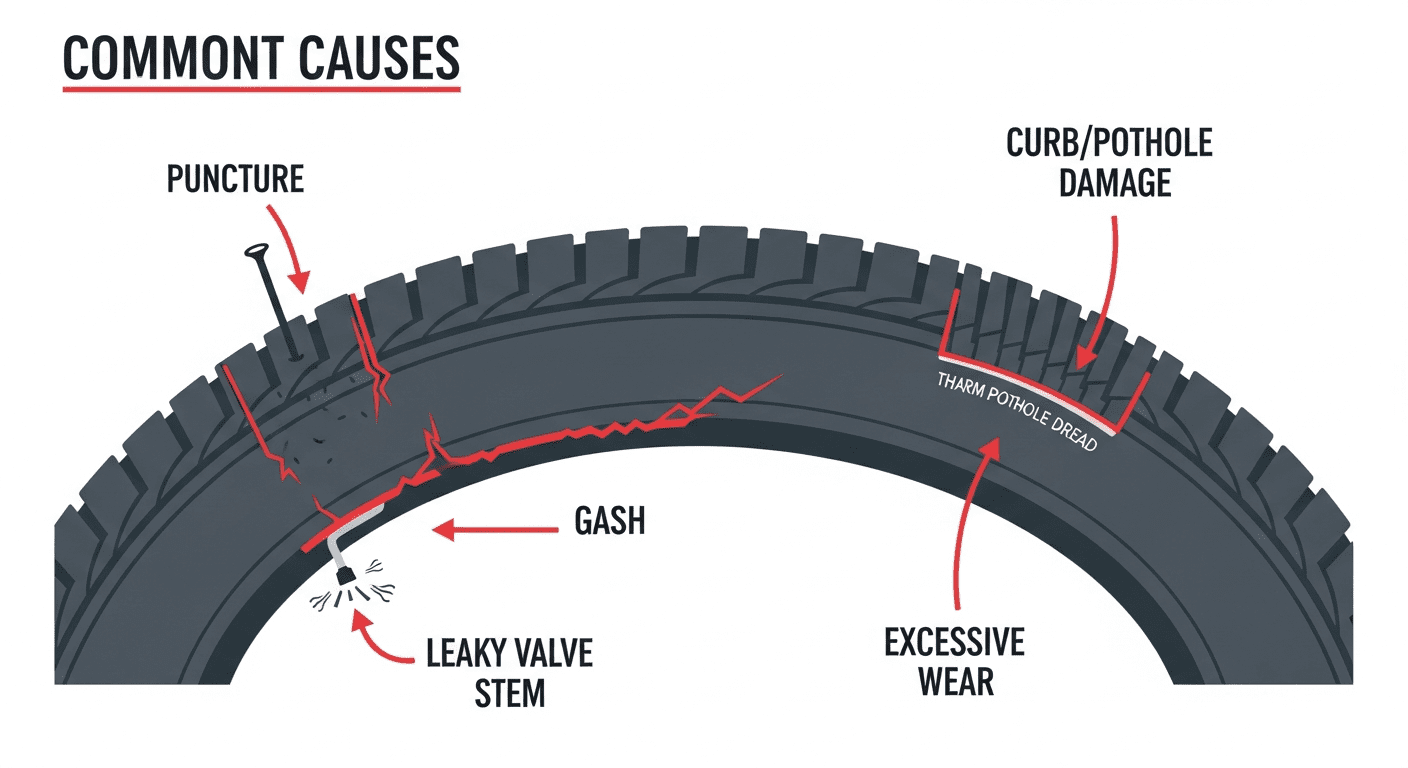
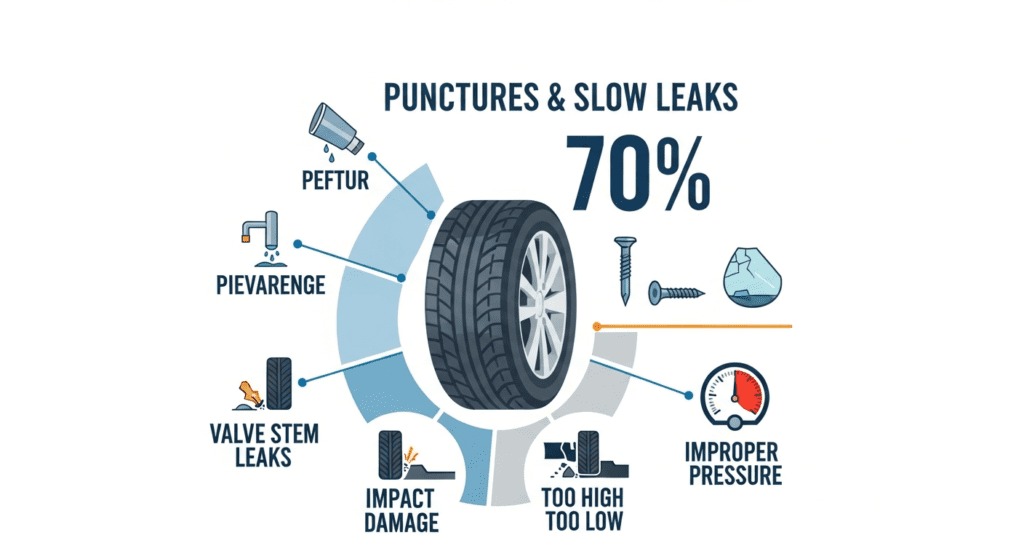
 Common culprits behind a flat tire include punctures, impact damage, valve leaks, and general wear.
Flat tyres, or flat tyres, are an unfortunate but often unavoidable part of vehicle ownership. They typically occur due to punctures caused by sharp objects on the road, such as nails, screws, or glass. Other contributing factors can include tyre damage, valve stem leaks, or even hitting kerbs or potholes with excessive force. Damage to the tyre’s tread is a common culprit, allowing air to escape. In some cases, issues with tyre pressure, either too low or too high, can also compromise tyre integrity. This guide is designed to demystify the process of dealing with a flat tyre, offering practical, actionable advice to resolve the issue swiftly. We will cover immediate safety measures, different repair methods, and crucial preventative tips.
The “Quick Fix” Promise: What You’ll Learn to Get Back on the Road Fast
This guide promises to equip you with the knowledge to tackle a flat tyre situation with confidence. You’ll learn how to prioritize safety on the roadside, assess the type and severity of the damage to your tyre, and determine the most appropriate quick fix method. We will detail how to use emergency tyre sealant products and tire plug kits for immediate, temporary repairs. Furthermore, you’ll gain a thorough understanding of the steps involved in changing a flat tyre for a more permanent solution, covering the essential tools required, such as a jack and lug wrench. Finally, we’ll guide you on critical post-fix actions, including checking tyre pressure and understanding driving limitations, as well as proactive maintenance to prevent future flat tyres.
Immediate Safety First: Securing Your Vehicle and Yourself
Encountering a flat tyre, particularly on a busy roadside, presents immediate safety hazards. The primary concern is to protect yourself and other road users from harm. This involves a systematic approach to securing your vehicle and making it visible to oncoming traffic. Ignoring safety protocols can lead to dangerous situations; approximately 11,000 tire-related crashes happen in the United States annually, with 563 fatalities resulting in 2022 alone [Utires.com, 2024]. Therefore, every step taken must prioritize well-being.
Pull Over Safely: Activating Hazard Lights and Finding a Secure Location
The moment you suspect a flat tyre – perhaps you hear a flapping sound, feel a pull to one side, or notice a warning light – your immediate priority is to pull over safely. Avoid sudden braking or sharp turns. Gently ease your vehicle off the road, aiming for a flat, stable surface away from traffic. Activate your hazard lights immediately to alert other drivers of your predicament. Look for a wide shoulder, a parking lot, or any area that provides a safe buffer zone from moving vehicles. Never attempt to stop on a blind corner, a hill, or in a narrow lane where visibility is compromised.
Enhancing Visibility: Using Warning Triangles and Roadside Emergency Kits
Once safely stationary, enhance your vehicle’s visibility to prevent accidents. Most roadside emergency kits include reflective warning triangles or flares. Place these strategically behind your vehicle – typically 50-100 feet apart, and at least 100 feet behind your car on highways – to warn approaching drivers well in advance. This simple act significantly reduces the risk of a secondary collision. Ensure you have a well-stocked emergency kit containing items like reflective vests, gloves, and a basic first-aid kit, which can be invaluable in various roadside situations.
Engaging the Parking Brake and Wheel Wedges: Preventing Vehicle Movement
Before attempting any repair or tyre change, it is crucial to immobilize your vehicle. Engage the parking brake firmly. If your vehicle is on even a slight incline, this alone might not be sufficient. Use wheel wedges, also known as chocks, to block the wheels on the opposite end of the vehicle from the flat tyre. For example, if you have a flat on a rear tyre, place wedges in front of and behind the front wheels. This prevents the vehicle from rolling while it is elevated, ensuring stability and preventing the jack from slipping, which could lead to serious injury.
Assess Your Flat: Choosing the Right Quick Fix Method
With your vehicle safely secured, the next step is to assess the damage to your tyre and determine the best course of action. The type of puncture, its location, and the tools available will dictate whether a quick temporary fix is feasible or if a full tyre change is necessary. Understanding these factors will help you make an informed decision, saving you time and potentially avoiding further damage.
Inspecting the Damage: Identifying Puncture Type and Severity
Carefully examine the flat tyre. Look for the object that caused the puncture, such as a nail or screw, and note its location. Punctures in the tread area are often repairable with a plug kit, provided they are not too large. However, punctures in the tyre’s sidewall are generally not repairable due to the flexing and stress on this area; these will always require replacement. Also, assess the overall condition of the tyre. Significant tread wear, cracks, or bulges may indicate that the tyre is already compromised and needs replacement, regardless of the puncture.
Checking Your Toolkit: Do You Have a Spare Tyre, Sealant, or Plug Kit?
Before proceeding, confirm the contents of your vehicle’s emergency equipment. Most vehicles come equipped with a spare tyre (either full-size or a temporary “donut” spare), a jack, and a lug wrench. Many modern vehicles, however, are now sold without a spare tyre, opting instead for a tyre sealant or a tyre repair kit. In 2024, the rate of flat tires requiring a tow increased by 6% compared to 2023, likely due to many newer vehicles no longer including a spare tyre [Agero, 2024]. Familiarize yourself with what your vehicle manufacturer provides. Also, check if you have an aftermarket tire repair kit, which might include sealant or a plug kit.
Decision Time: Which Method is Best for Your Situation?
If the puncture is in the tread and relatively small (typically less than 1/4 inch in diameter), and you have the necessary equipment, a temporary repair using sealant or a plug kit is often the quickest option. This is ideal for getting you to a service station. If the puncture is in the sidewall, or if the tyre is otherwise damaged, or if you are uncomfortable using a repair kit, changing to your spare tyre is the more reliable immediate solution. The spare tyre, while often temporary, is designed to allow you to drive safely, albeit with limitations, to a place where the damaged tyre can be professionally inspected or replaced.
Method 1: The Quickest Fix – Using a Tire Sealant or Plug Kit
For minor punctures in the tread, a tyre sealant or plug kit can offer a rapid solution to get you moving again. These kits are designed for temporary repairs and require careful application. It’s crucial to understand their limitations and to seek professional inspection as soon as possible after use.
Option A: Emergency Puncture Sealant (e.g., Fix-a-Flat)
Emergency puncture sealants are aerosol cans containing a liquid sealant and propellant. They are designed to be injected directly into the tyre through the valve stem.
How to Use:
- Locate the Valve Stem: Find the valve stem on the flat tyre. If the puncturing object is still in the tyre, it’s often best to leave it in place as it can help seal the hole temporarily.
- Connect the Sealant: Remove the valve cap and attach the sealant can’s hose firmly to the valve stem. Ensure a tight seal.
- Inject the Sealant: Follow the manufacturer’s instructions on the can. Typically, you will invert the can and press the button or trigger to discharge the entire contents into the tyre. The propellant inflates the tyre while the sealant flows to the puncture.
- Inflate (if necessary): Some sealants only provide sealant; others include a propellant to inflate the tyre. If your tyre isn’t fully inflated, you’ll need an air compressor to add air to the recommended pressure.
- Drive Immediately: Drive your vehicle immediately for a few miles at a moderate speed (usually around 30-50 mph) to allow the sealant to distribute and seal the puncture.
- Check Tyre Pressure: After a short drive, check the tyre pressure with a gauge. If it’s low, use an air compressor to inflate it to the manufacturer’s recommended level.
Important Note: Sealant products are a temporary fix. They can sometimes interfere with professional tyre repair or TPMS (Tyre Pressure Monitoring System) sensors. It’s essential to inform a tyre professional that sealant has been used.
Option B: Tire Plug Kit for Tread Punctures
A tyre plug kit, also known as a tire repair kit, is a more manual but often more durable temporary fix for punctures in the tread. These kits typically include rubber plugs, an insertion tool (reamer), and a tool to insert the plug.
How to Use:
- Remove the Puncturing Object: If the nail or screw is still in the tyre, carefully remove it using pliers or the tool provided in your kit.
- Prepare the Hole: Use the reamer tool to clean out and enlarge the puncture hole. Insert the reamer and twist it several times to ensure the hole is clean and ready for the plug.
- Prepare the Plug: Thread a rubber plug through the eye of the insertion tool, folding the plug in half.
- Insert the Plug: Push the insertion tool with the plug firmly into the puncture hole until only about half an inch of the plug remains exposed. Apply significant force.
- Remove the Tool: Quickly and firmly pull the insertion tool straight out. The plug should remain in the tyre, sealing the puncture.
- Trim Excess Plug: If necessary, trim any excess plug material sticking out of the tyre tread.
- Inflate the Tyre: Use an air compressor to inflate the tyre to the manufacturer’s recommended pressure.
- Check for Leaks: Listen for air escaping around the plug. You can also use a soapy water solution to check for bubbles.
- Drive Cautiously: Drive at moderate speeds and have the tyre professionally inspected as soon as possible. This method is only suitable for punctures in the tread area.
Method 2: The Reliable Fix – Changing to Your Spare Tyre
When a quick fix isn’t possible or advisable, changing to your spare tyre is the most reliable way to deal with a flat. This is a more involved process but ensures you can continue your journey safely to a repair facility.
When Changing Your Spare is Necessary or Preferred
Changing to a spare tyre is recommended when:
- The puncture is in the tyre’s sidewall.
- The puncture is too large to be effectively sealed or plugged.
- You don’t have a repair kit or sealant.
- You prefer a more robust temporary solution than sealant.
- The tyre shows signs of significant damage, wear, or age.
- The nature of the puncture is unknown or potentially severe.
Essential Tools for a Tyre Change
To change a flat tyre, you will need the following tools, typically found in your vehicle’s toolkit:
- Spare Tyre: Ensure it is properly inflated.
- Jack: Used to lift the vehicle. Familiarize yourself with your vehicle’s specific jack points – consult your manufacturer’s manual.
- Lug Wrench: Used to loosen and tighten the lug nuts that hold the wheel in place.
- Vehicle Owner’s Manual: Essential for locating jack points and understanding specific procedures.
- Wheel Wedges/Chocks: For added safety to prevent vehicle movement.
- Gloves: To keep your hands clean.
- Flashlight: If working in low light conditions.
Step-by-Step Guide to Changing a Flat Tyre
Follow these steps carefully to safely change a flat tyre:
- Park and Secure: As detailed earlier, pull over to a safe, flat location, engage the parking brake, activate hazard lights, and place wheel wedges.
- Access the Spare and Tools: Locate your spare tyre, jack, and lug wrench. They are usually stored in the boot (trunk) or under the vehicle.
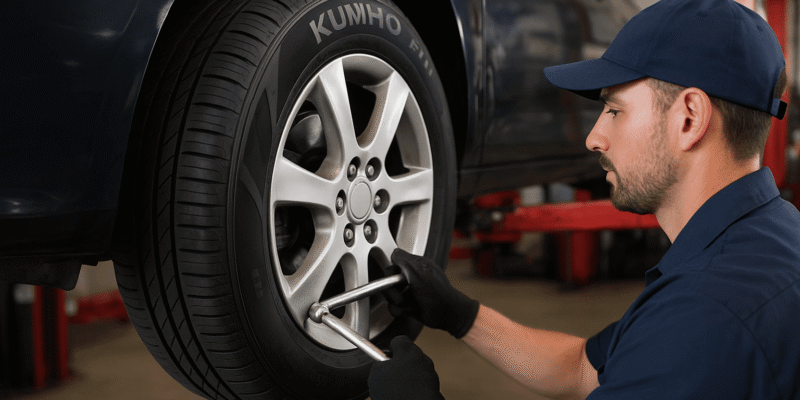
- Loosen Lug Nuts: Before jacking up the vehicle, use the lug wrench to loosen the lug nuts on the flat tyre. Turn them counter-clockwise. Loosen them only about a half to a full turn – do not remove them yet. They can be very tight, so you might need to use your foot or body weight on the wrench.
- Position the Jack: Place the jack under the vehicle at the designated jacking point closest to the flat tyre, as indicated in your owner’s manual. Ensure the jack is on firm ground.
- Raise the Vehicle: Operate the jack to lift the vehicle until the flat tyre is completely off the ground, with enough clearance to remove it and install the inflated spare.
- Remove Lug Nuts and Flat Tyre: Finish unscrewing the lug nuts by hand. Keep them together in a safe place (like a pocket or hubcap). Carefully pull the flat tyre straight towards you and slide it under the vehicle frame as an added safety measure in case the jack fails.
- Mount the Spare Tyre: Align the spare tyre with the wheel studs and push it onto the hub.
- Install Lug Nuts: Screw the lug nuts back on by hand as tightly as possible.
- Lower the Vehicle: Carefully lower the vehicle using the jack until the spare tyre is resting firmly on the ground but the full weight is not yet on it.
- Tighten Lug Nuts: Use the lug wrench to tighten the lug nuts firmly. Tighten them in a star or criss-cross pattern to ensure even pressure.
- Fully Lower Vehicle: Lower the vehicle completely to the ground.
- Final Tightening: With the full weight of the vehicle on the tyre, use the lug wrench to tighten the lug nuts as much as possible.
- Stow Equipment: Store the flat tyre, jack, and lug wrench securely.
- Check Tyre Pressure: Immediately check the pressure of the spare tyre. If it’s low, use an air compressor to inflate it to the correct pressure specified for your spare.
After the Quick Fix: Important Next Steps
Whether you’ve used a sealant, plug kit, or changed to a spare tyre, the process isn’t complete once you’re back on the road. Several crucial steps must be taken to ensure safety and the longevity of your tyre.
Checking and Maintaining Tyre Pressure
Proper tyre pressure is paramount for safety, fuel efficiency, and tyre wear. After any repair or tyre change, it’s essential to check the pressure of the affected tyre, as well as all other tyres on the vehicle. Use a reliable tyre pressure gauge and inflate or deflate the tyres to the levels recommended by your vehicle’s manufacturer, typically found on a sticker in the driver’s side doorjamb or in the owner’s manual. Underinflated tyres can lead to poor handling, increased fuel consumption, and a higher risk of blowouts. Overinflated tyres can cause a harsher ride and uneven wear.
Driving on a Repaired Tyre or Spare Tyre
Temporary fixes like sealant or plugs are not permanent solutions. They are designed to get you to a tyre shop safely. If you used sealant, inform the tyre professional as it can affect their repair process. Similarly, if you fitted a spare tyre, especially a temporary “donut” spare, be aware of its limitations. These are typically rated for lower speeds (often around 50 mph) and limited distances. Driving beyond these limits can be dangerous and can damage the spare tyre. Always consult the sidewall of the spare or your vehicle manual for specific restrictions.
Seeking Professional Assistance: Getting a Permanent Repair or Tyre Replacement
The flat tyre you repaired or replaced with a spare needs professional attention promptly. Drive to a reputable tyre shop or mechanic as soon as possible. They will inspect the damaged tyre to determine if a permanent repair is possible and safe. If the puncture is in the sidewall, or if the tyre is otherwise compromised (e.g., significant tread wear, damage from running flat), it will need to be replaced. The average cost to repair a tire in 2025 ranges from about $20 to $50, but some specialized fixes can cost $100 or more, and a new tyre can cost significantly more depending on the size and manufacturer [Lemonade, 2025]. It’s better to invest in a proper repair or replacement than to risk further damage or a dangerous failure.
Prevention is the Best Cure: Avoiding Future Flat Tyres
While this guide focuses on fixing a flat, the best strategy is to prevent them from happening in the first place. Proactive maintenance and careful driving habits can significantly reduce your risk of experiencing a flat tyre.
Regular Tyre Pressure Checks: The Simplest Prevention
The most straightforward way to prevent flats is to maintain correct tyre pressure. Regularly check your tyre pressure – at least once a month and before long journeys. This is especially important as temperature changes can affect pressure. Properly inflated tyres are less susceptible to punctures from small objects and are less likely to suffer damage from impacts.
Routine Tyre Inspection: Checking for Tread Wear and Embedded Debris
Periodically inspect your tyres for visible signs of damage. Look for cuts, bulges, and uneven tread wear. Pay close attention to the tread for any embedded debris like nails, screws, or stones. If you find anything embedded, carefully remove it if it’s minor and safe to do so, or have it checked by a professional. Ensure your tyre tread depth is adequate for safe driving; worn tread significantly increases the risk of punctures and reduces grip, especially in wet conditions.
Driving Habits: Avoiding Potholes, Kerbs, and Road Hazards
Mindful driving habits can save your tyres from damage. Avoid driving over potholes, sharp objects, and kerbs whenever possible. Hitting these can cause immediate damage, such as a blowout, or create small cracks that can lead to slow leaks over time. When parking, be careful not to scrape the sidewalls against kerbs. Being aware of the road surface and potential hazards can prevent many common tyre issues.
Proper Vehicle Maintenance: Ensuring Overall Tyre Health
The health of your vehicle extends to the condition of its tyres. Ensure your vehicle’s alignment is checked periodically, as misaligned wheels can cause uneven and accelerated tyre wear, making them more vulnerable. If your vehicle manufacturer recommends tyre rotation, adhere to that schedule. Rotating tyres helps them wear more evenly, extending their lifespan and maintaining their integrity.
When to Call for Roadside Assistance
While this guide empowers you to handle many flat tyre situations yourself, there are times when calling for professional roadside assistance is the safest and most practical option.
Understanding When DIY Isn’t Safe or Possible
You should call for roadside assistance if:
- You are in a dangerous location with heavy traffic and cannot pull over safely.
- You are physically unable to change a tyre or use a repair kit.
- You lack the necessary tools or your spare tyre is also flat.
- The lug nuts are seized and you cannot loosen them.
- You feel unsafe or uncertain about any step of the process.
The roadside assistance market is substantial and growing, with the global vehicle roadside assistance market revenue valued at USD 26.19 billion in 2024 and expected to reach USD 39.65 billion by 2033 [Precedence Research, 2024]. AAA alone responds to over 3.5 million flat tire calls each year [AutoInsurance.com, 2025], illustrating the demand for professional help. Knowing when to admit that professional help is needed is a sign of good judgment and a commitment to safety.
Quick Summary
A flat tyre can be a significant inconvenience, but it doesn’t have to be a crisis. By understanding why flat tyres happen, prioritizing immediate safety, assessing the damage, and knowing your repair options – whether it’s a quick fix with sealant or a plug, or the more reliable method of changing to a spare – you can effectively manage the situation. Remember that temporary fixes are just that: temporary. Always seek professional inspection and repair or replacement as soon as possible. Furthermore, by adopting preventative measures like regular tyre pressure checks, routine inspections, and careful driving habits, you can significantly reduce the likelihood of encountering a flat tyre in the future. Being prepared and informed is your best defence against roadside disruptions, ensuring your journeys remain as smooth and safe as possible.